





A print and apply label applicator is worth evaluating when manual label handling slows a defined carton, tote, or pallet workflow. It prints current variable data and applies a readable label at controlled points in packing, sortation, consolidation, or dispatch.
Currently, some of Brazil's leading logistics service providers specializing in e-commerce have begun deploying these systems to improve the labeling efficiency of packages and outer cartons, with the printed labels supporting carrier delivery and internal warehouse control.
This guide explains when print-and-apply labeling fits Brazilian fulfillment workflows, shows how the iDPRT PA4 Series can support carton, tote, case, and pallet labeling, and outlines the technical checks required before evaluating a PA4 Series configuration.
When Do Brazilian E-commerce and Logistics Operations Need Print-and-Apply Labeling?

Use print and apply labeling system when a logistics label must be generated from live operational data and placed consistently on cartons, cases, totes, or pallets. It suits repeatable flows with a defined application point, rather than low-volume or highly variable packing tasks.
Brazil’s e-commerce scale makes this automation decision increasingly relevant.
According to the Brazilian Association of Artificial Intelligence and E-commerce (ABIACOM), Brazil's e-commerce market is projected to reach approximately 460.87 million online orders in 2026, with 97.06 million online shoppers and revenue of R$259.8 billion.
Faced with high volumes of package and carton labeling, many Brazilian logistics and e-commerce companies are now considering print-and-apply systems. In practice, automatic labeling system is a strong fit when several of these conditions apply:
- ● Operators repeatedly print, peel, and apply variable labels by hand.
- ● Downstream scanners need labels in a consistent top or side position.
- ● Missing, skewed, damaged, or unreadable labels create rework before sortation or dispatch.
- ● Cartons move on a conveyor or arrive at a controlled handling station.
- ● A WMS, WCS, TMS, or ERP can provide a reliable label trigger and current variable data.
- ● The operation must identify cartons, totes, or pallets as logistics units rather than only print parcel labels.
Print-and-apply labeling reduces manual work, improves label accuracy and placement, and minimizes rework from missing or unreadable labels. It enables higher throughput and more reliable downstream scanning in automated production lines and automated warehousing.
Globally, package and box label applicators are used in e-commerce fulfillment, 3PL and distribution, retail replenishment, consumer electronics, food and beverage, pharmaceuticals, cosmetics, automotive parts, and consumer packaged goods.
What Does Print-and-Apply Labeling Identify in a Fulfillment Center?
Print-and-apply systems apply identification labels to the cartons, totes, cases, pallets, and dispatch units moving through a fulfillment operation. The required label depends on the next handling step, not on a single universal labeling rule.
For highly automated e-commerce fulfillment centers and 3PLs in Brazil, print-and-apply systems are commonly deployed to label outbound cartons, reusable totes, cases, pallets, and other logistics units that require consistent, scan-ready identification.
| Fulfillment use case | Label typically used | Usually generated by | What it identifies |
|---|---|---|---|
| Outbound consumer parcel handover, delivery routing, and tracking | Carrier shipping label | Carrier platform, TMS, marketplace, or fulfillment system | The shipment for carrier delivery |
| Carton, tote, sortation, staging, consolidation, and exception handling | Internal LPN | WMS or warehouse-control process | A handling unit within the warehouse workflow |
| Cases, pallets, inter-DC transfers, retailer replenishment, or partner-specific logistics flows | SSCC / GS1 logistics label | Shipper or logistics process using GS1 standards | A standardized logistics unit across supply-chain partners |
How Print-and-Apply Systems Integrate with WMS and Conveyor Controls
A WMS-driven print-and-apply workflow connects a digital logistics event to a specific physical carton, tote, or pallet.
When a carton is closed, a tote is assigned, or a pallet is completed, the WMS, WCS, or other host system generates the required label data, such as a shipping ID, LPN, SSCC, destination, carrier service, or routing information.
The print-and-apply system receives the label format and variable data. A conveyor signal, photoelectric sensor, scanner event, or control-system trigger identifies when the correct logistics unit reaches the application point, allowing the system to print and apply the label in the required position.
A fixed scanner, vision system, or operator scan can confirm label presence, barcode readability, and—where required—correct data association. If printing, application, or verification fails, the unit should enter a defined exception process before moving downstream.
The key requirement is reliable label-to-unit association: the label must remain linked to the intended carton, tote, or pallet throughout printing, application, scanning, and WMS status updates.
How the iDPRT PA4 Series Supports Carton and Pallet Labeling
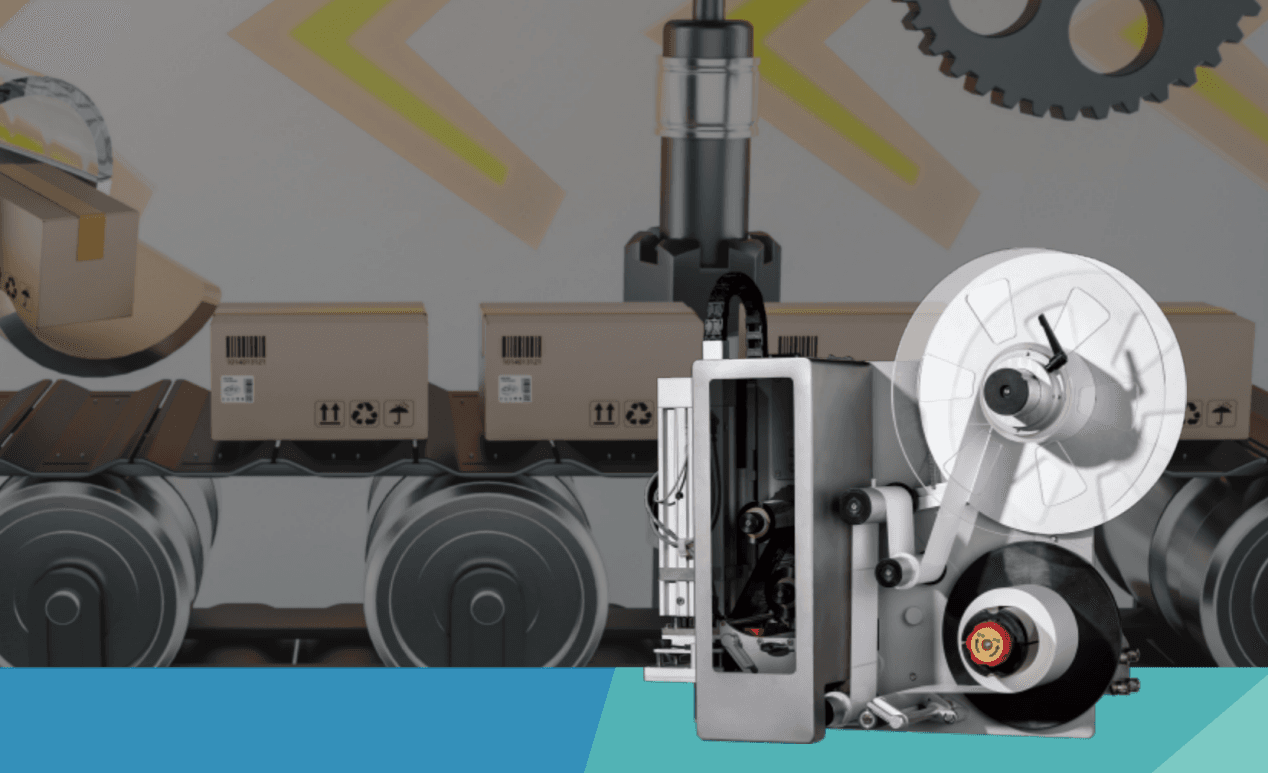
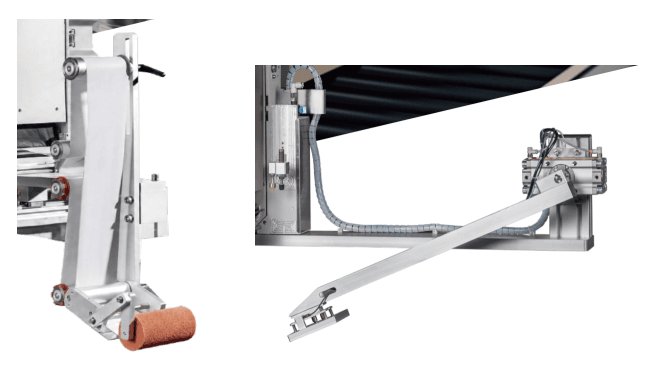
The iDPRT PA4 Series prints and applies variable-data labels to cartons, cases, pallets, and other logistics units at defined points in the material-handling process.
It combines configurable print engines and applicators to handle a range of label formats, package dimensions, and application positions, with options including tamp, blow, swing, and roller/wipe-on methods.
For Brazilian e-commerce fulfillment centers and 3PL operations, the PA4 Series Automatic Label Applicator can be integrated into packing and carton-sealing lines, conveyor induction points, consolidation areas, and pallet dispatch stations.
Typical e-commerce and warehouse applications include:
- ● Consumer electronics and appliances: Carton and pallet identification before sortation or dispatch.
- ● Toys and seasonal goods: Carton and case labeling for high-volume fulfillment.
- ● Beauty, personal care, pet supplies, and household goods: Variable-data labeling for cartons, totes, and cases.
- ● Apparel and footwear: Tote and standard-carton labeling in consolidation and dispatch.
PA4 Series Highlights
-
Configurable labeling: Multiple print-engine and labeling-arm options for carton, case, and pallet applications.
-
Variable-data printing: 300 dpi thermal transfer or direct thermal printing for shipping, tracking, and logistics labels.
-
Precision label placement: Designed for defined application points where labels must be applied in a consistent position and remain scan-ready through fulfillment and dispatch.
-
Integration-ready connectivity: USB, serial, Ethernet, and general-purpose I/O interfaces support project-level integration.
-
Continuous operation: 24/7 printing support, media-end alerts, and three-color LED/buzzer alarms.
PA431L Specifications at a Glance
The iDPRT PA431L is a representative 4-inch automatic print-and-apply configuration with a tamp/tamp-blow applicator. Key specifications are as follows:
What Should a Logistics Team Verify Before Selecting a Print-and-Apply System?
Start by matching the applicator method to the package flow. Then confirm that the label, required reach, throughput, and control signals match the proposed configuration.
For a detailed comparison of tamp, blow, wipe-on, and swing-arm application methods, see our automatic label applicator guide.
What information should the project team provide?
The following checklist helps operations, engineering, automation, and IT teams define the application before selecting equipment.
| Requirement | What to provide |
|---|---|
| Logistics unit | Carton, tote, case, pallet, or mixed flow |
| Package profile | Dimensions, surface, weight range, orientation, and spacing |
| Label | Size, thickness, material, adhesive, barcode content, and placement |
| Throughput | Required labels per minute and actual conveyor takt time |
| Application condition | Stationary or moving unit; required reach and installation orientation |
| Data source | WMS, WCS, TMS, ERP, or another system |
| Trigger and signals | Print trigger, sensor type, I/O requirement, and reject logic |
| Scan process | Scanner location, barcode symbology, verification method, and exception path |
| Operating environment | Temperature, humidity, dust exposure, access for cleaning, and maintenance routine |
Ready to evaluate print-and-apply labeling for your Brazilian e-commerce or 3PL operation?
Share your specific workflow details with us, and we will recommend the most suitable automatic label applicator models and corresponding configurations to help you achieve reliable, scan-ready labeling at key handling points.
Contact Our Experts